

Rare Set of 3 Antique Javanese Tin "Tiger Claw" Barter Money (Kuku Macan) – c. 15th – 18th Century (Majapahit to Islamic Sultanate periods) Lot: 3840
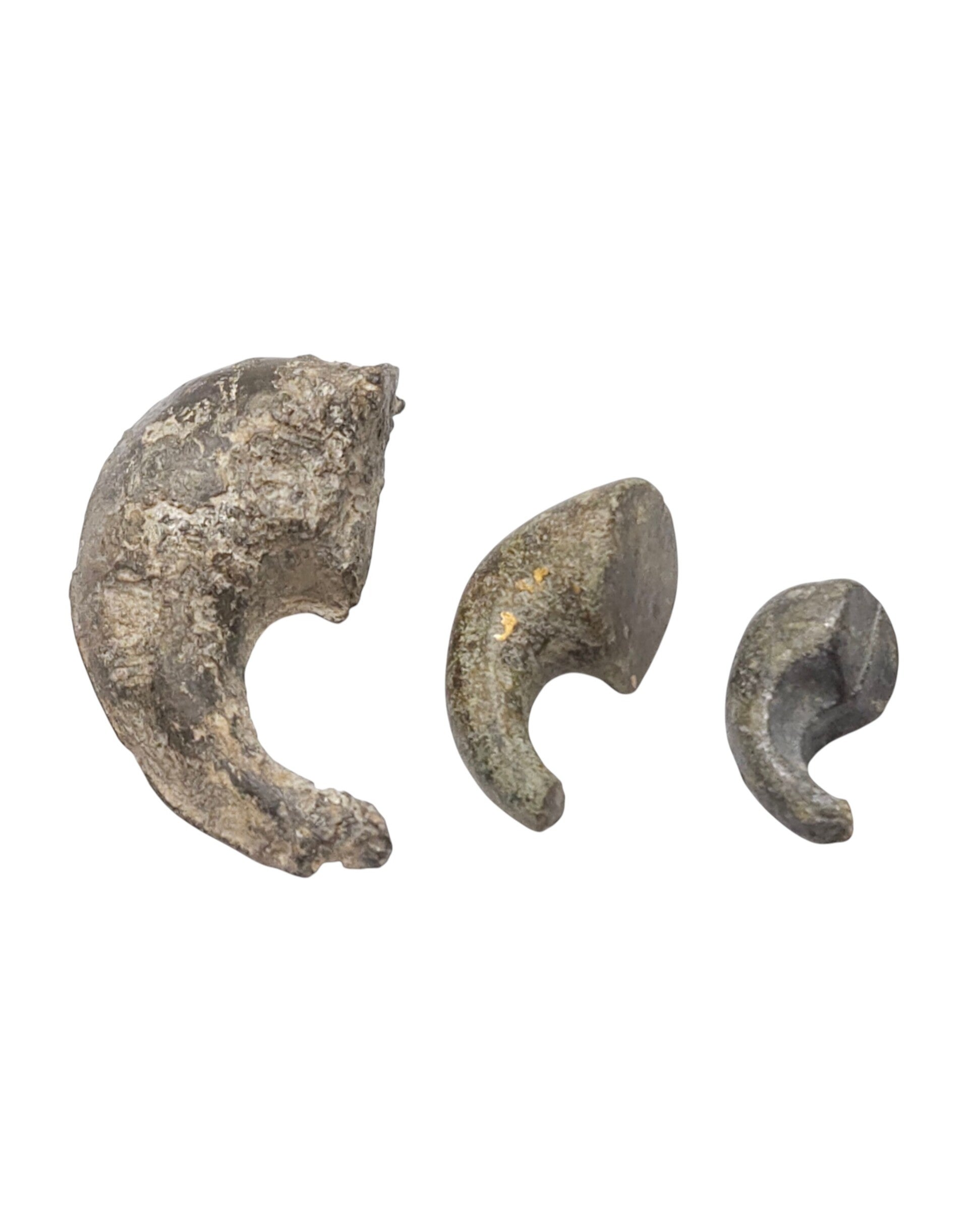
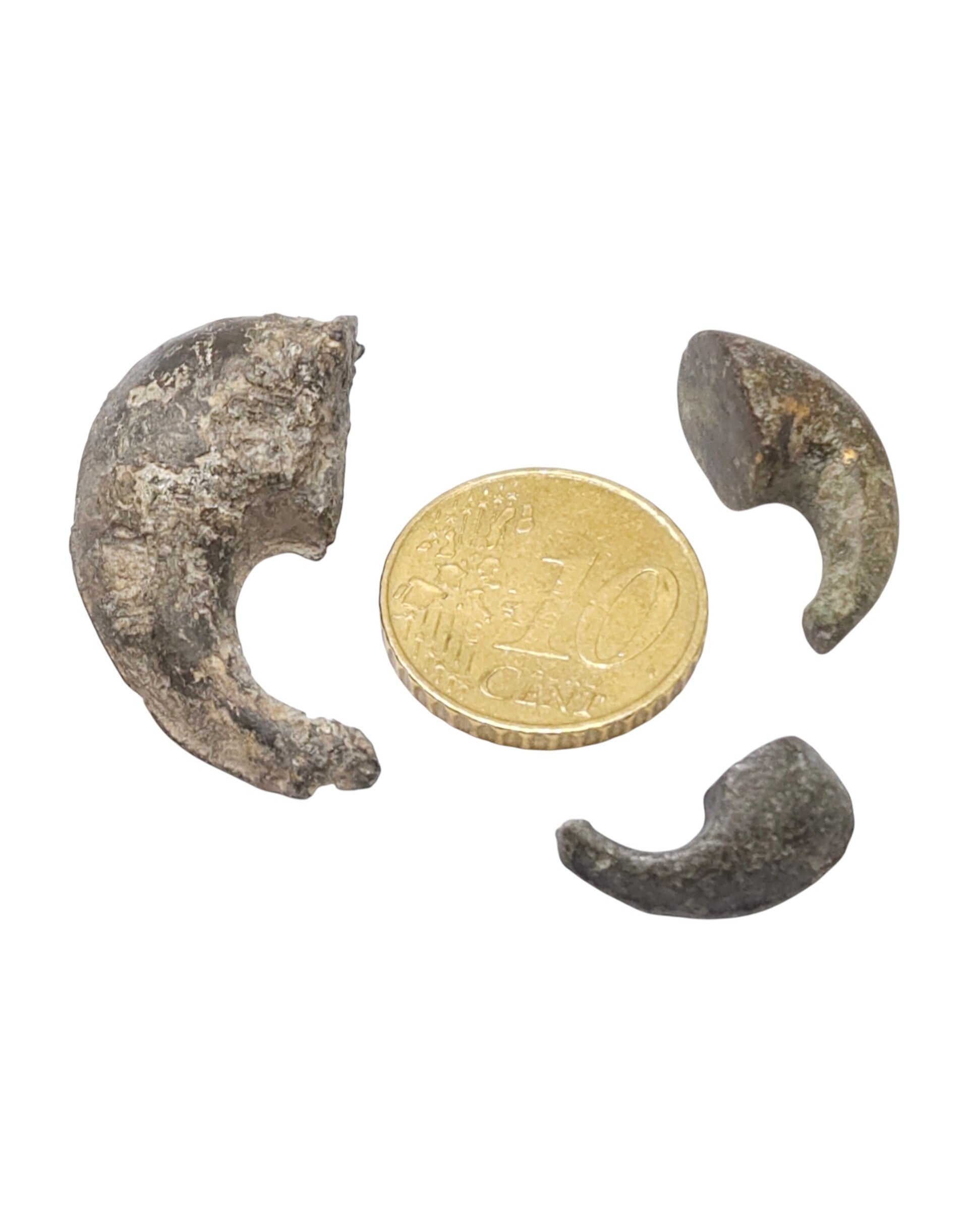
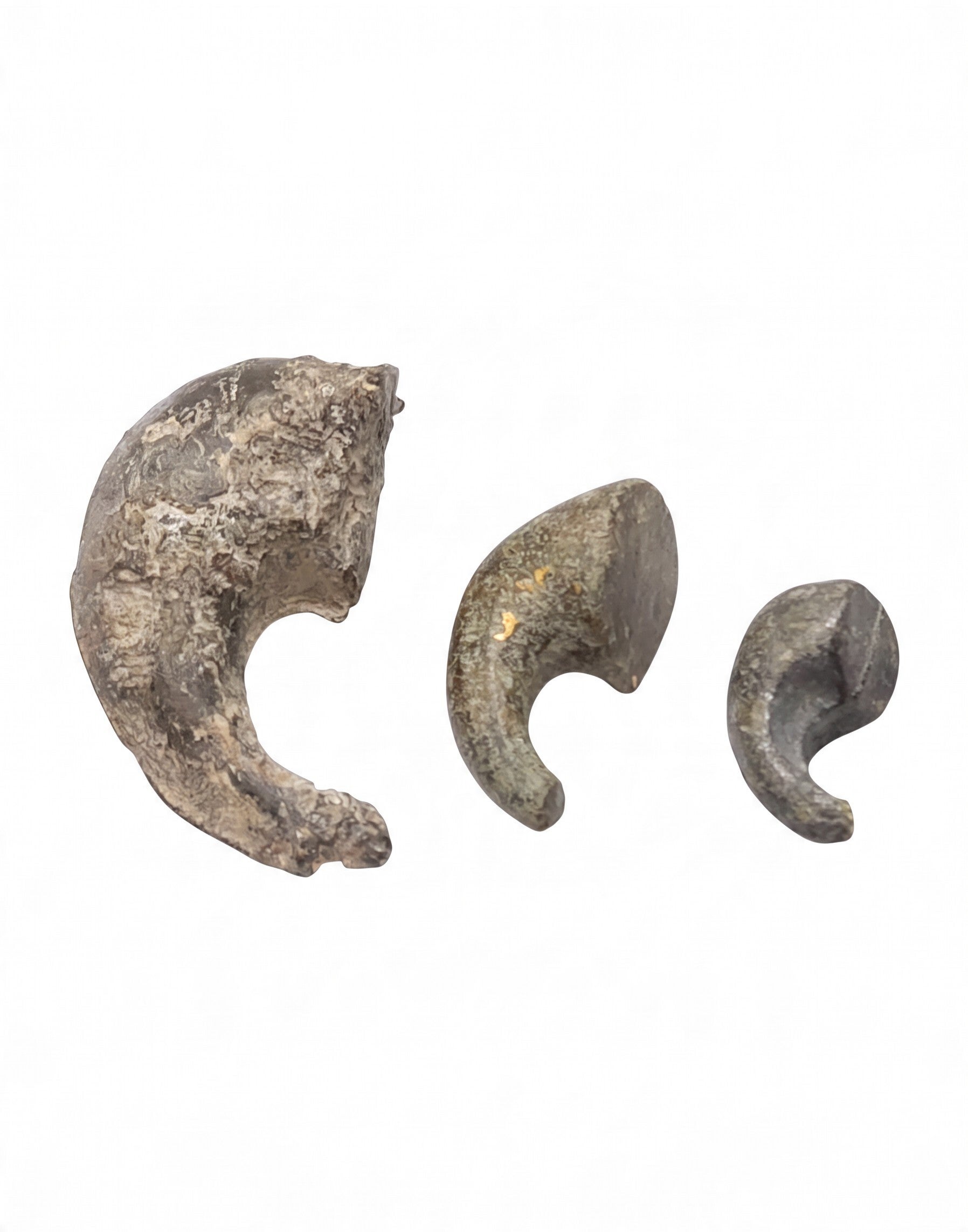
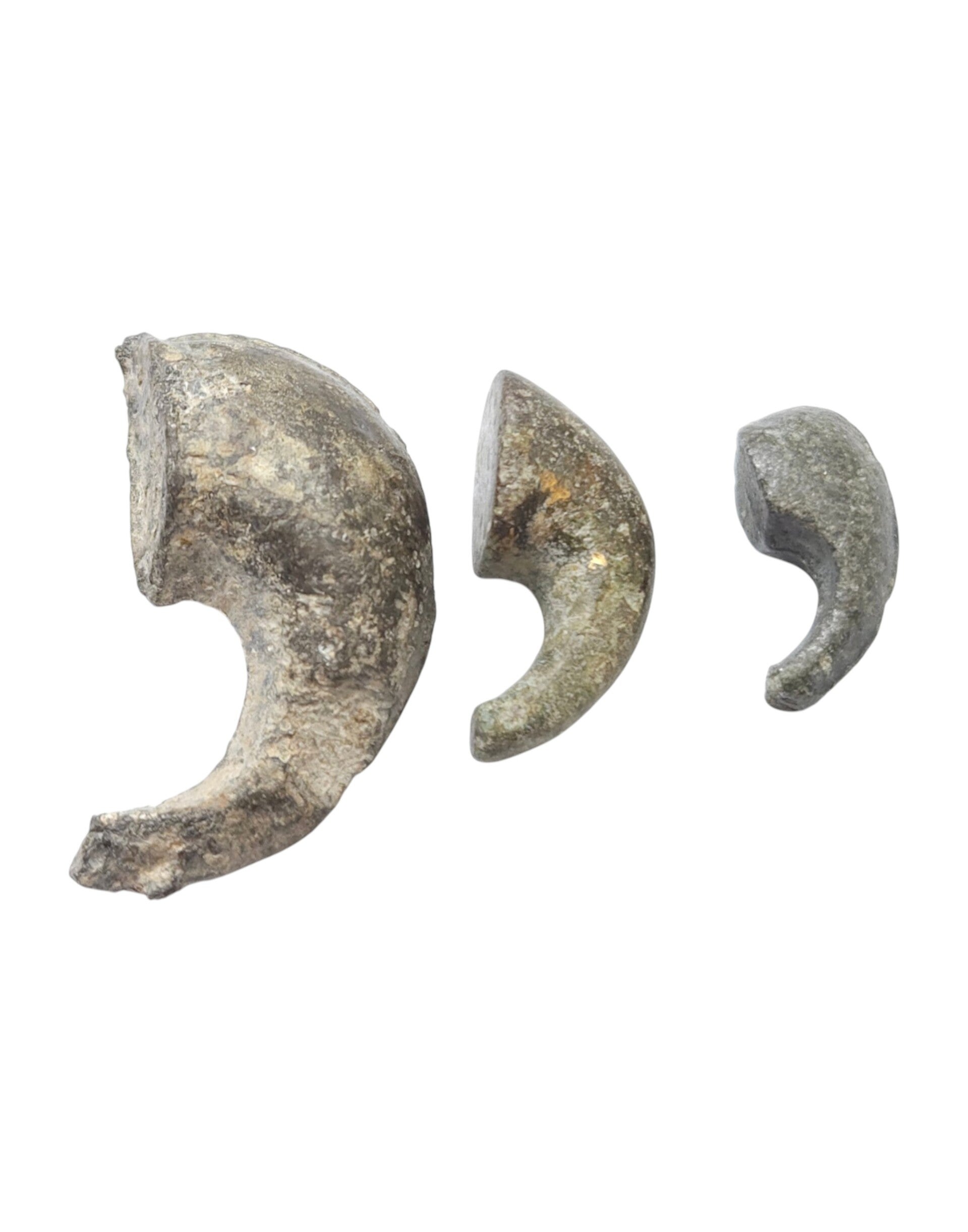
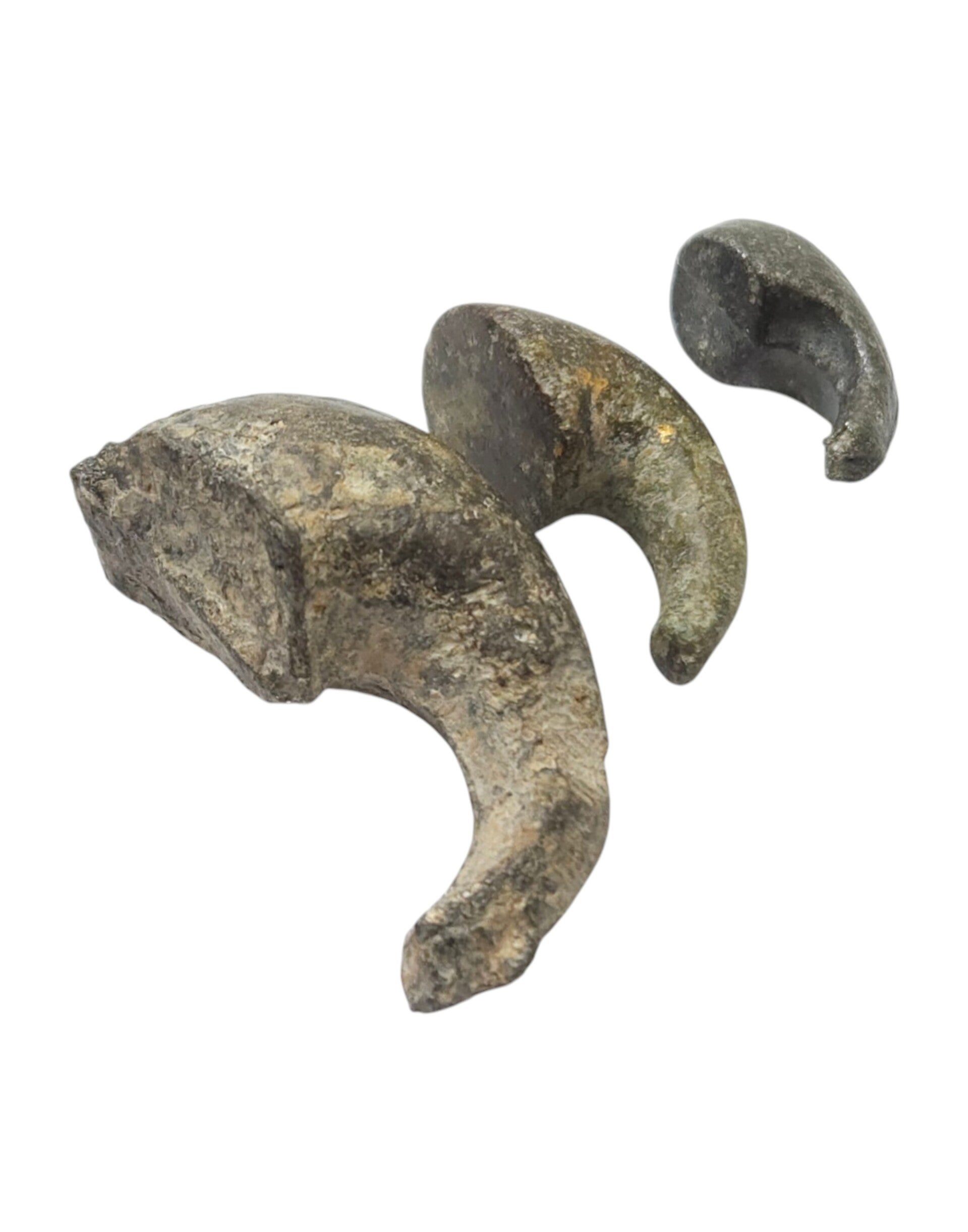
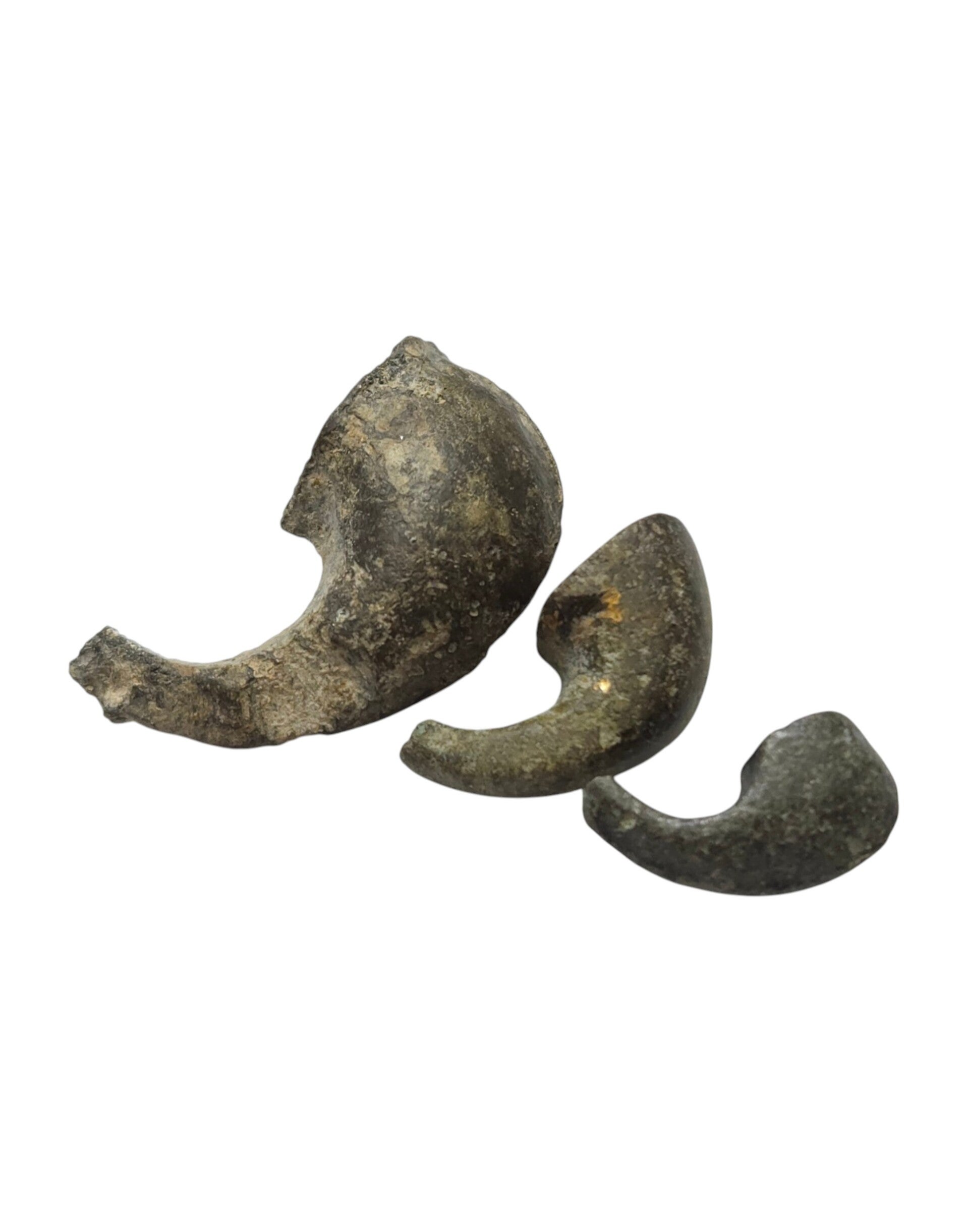
Rare Set of 3 Antique Javanese Tin "Tiger Claw" Barter Money (Kuku Macan) – c. 15th – 18th Century (Majapahit to Islamic Sultanate periods)
Lot: 3840
An interesting set of three antique tin "Tiger Claw" tokens, traditionally known as Kuku Macan. Originating from Java, Indonesia, these solid-cast implements represent a fascinating chapter in Southeast Asian economic history, serving as primitive currency (pre-coinage barter money) along the vital Sumatra-Java-Malay maritime trade networks.
In traditional Javanese culture, the tiger was a sacred symbol of royal power, courage, and spiritual protection. Real tiger claws were highly prized as amulets but naturally degraded over time; thus, master metalsmiths replicated their organic forms in durable cast tin.
Tin was an abundant and highly valued resource in the region, often cast into animal shapes (Tin Animal Money) to be used as a standardized medium of exchange. Notably, the mid-sized specimen in this fractional set features a distinct golden-toned appearance (likely gilded or an intentionally enriched surface alloy). In the early Javanese barter system, such visual distinction was often used to indicate a superior currency denomination or a piece carrying amuletic significance.
• Material: Solid cast tin / tin-lead alloy (density tested, consistent with historical regional tin components). The middle piece features a distinct golden/gilded surface layer.
Actual dimensions:
big claw: 30 x 17 x 14 mm, weigth: 16.5 gram.
middle claw: 21 x 9.4 x 11 mm, weigth: 6.2 gram.
smaller claw 16.2 x 7.4 x 7.9 mm, weigth: 2.95 gram.
Please take a good look at the photos, they are part of the description.
They provide a clear picture of the quality and condition of the product and they fill in any gaps in the text or correct any errors and are decisive for the description of the product.