

A fascinating trio of primitive Tin "Ring Money" from the Indonesian Archipelago (Majapahit to Sultanate periods, 14th - 17th Century)., itemnumber: W5146
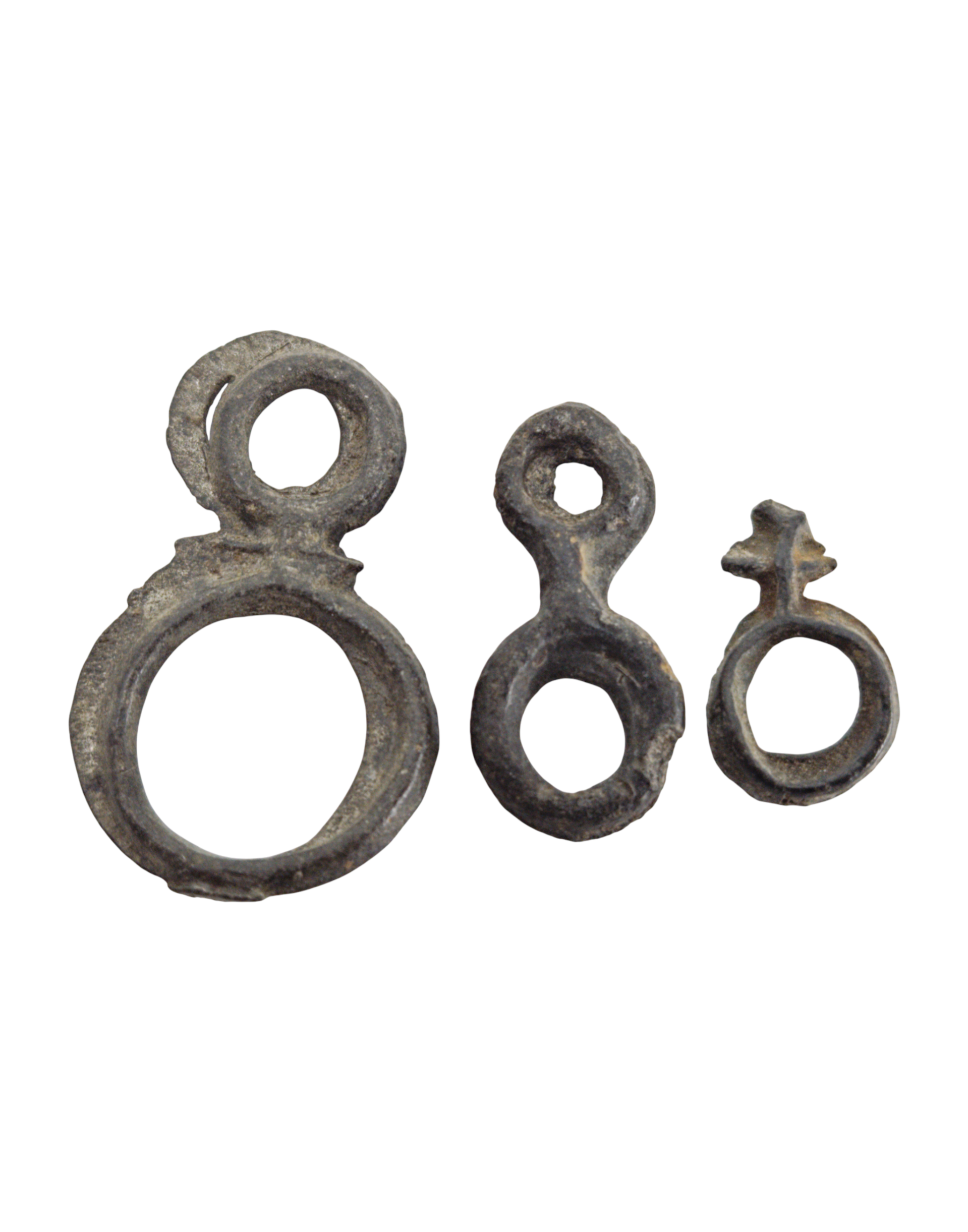
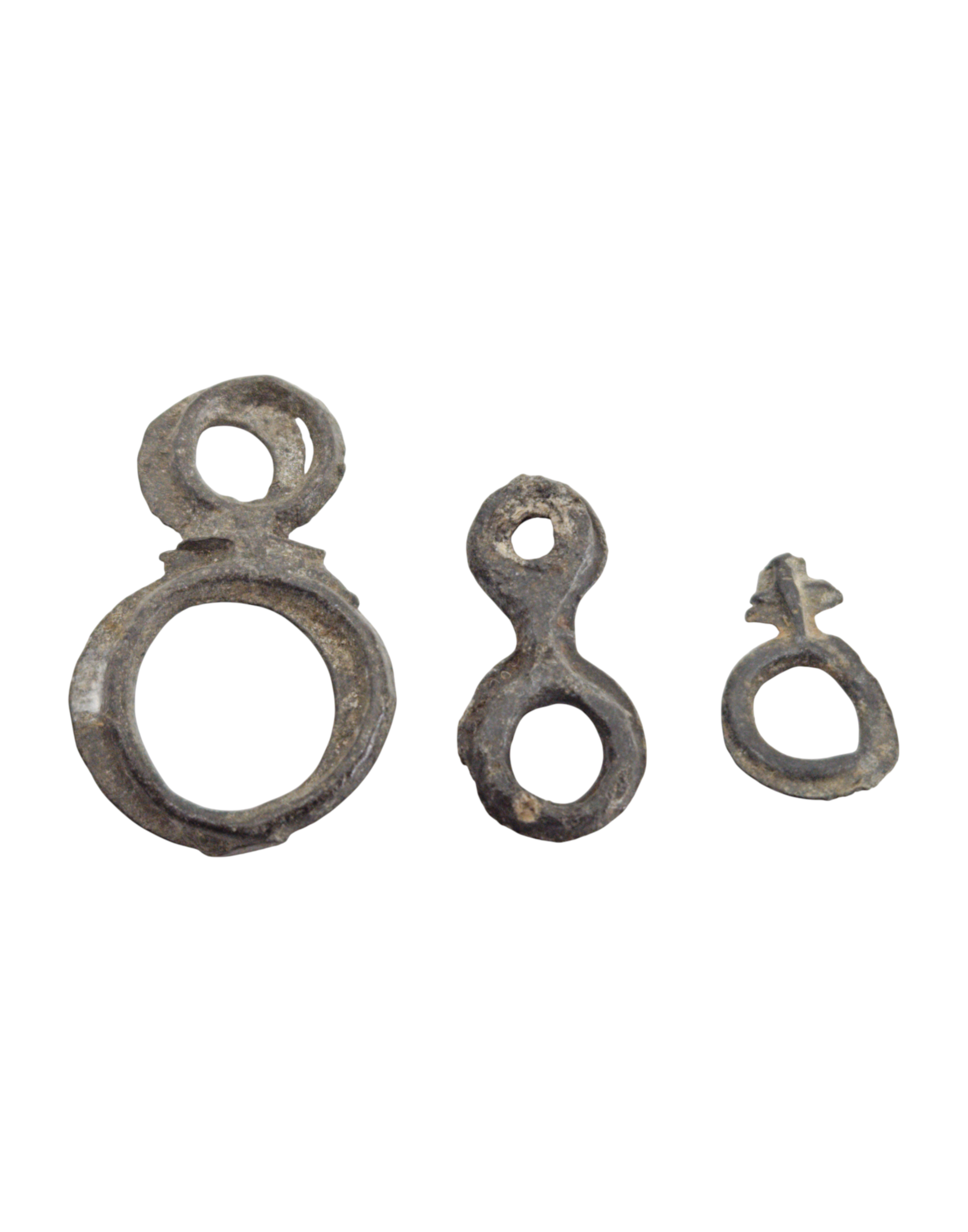
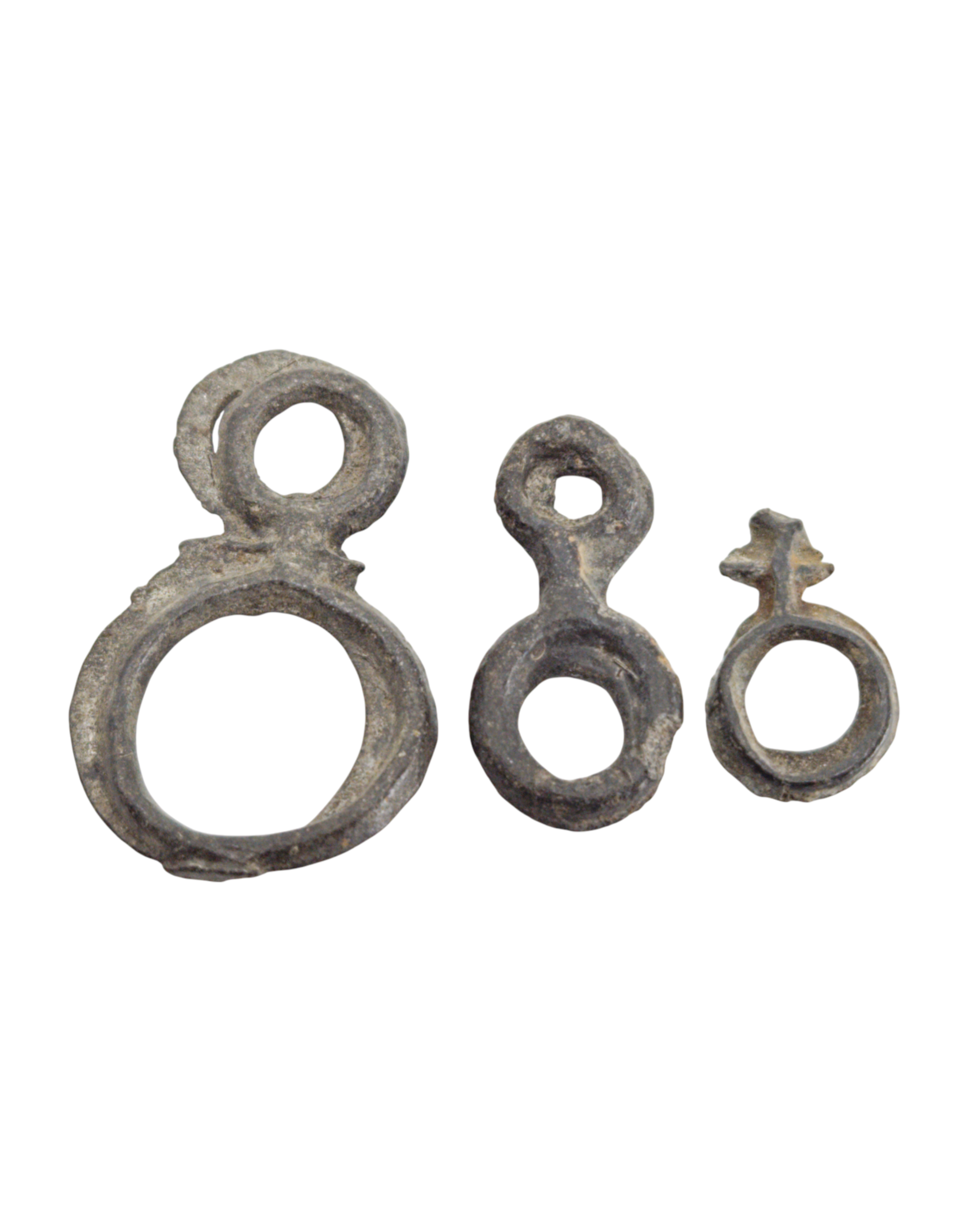
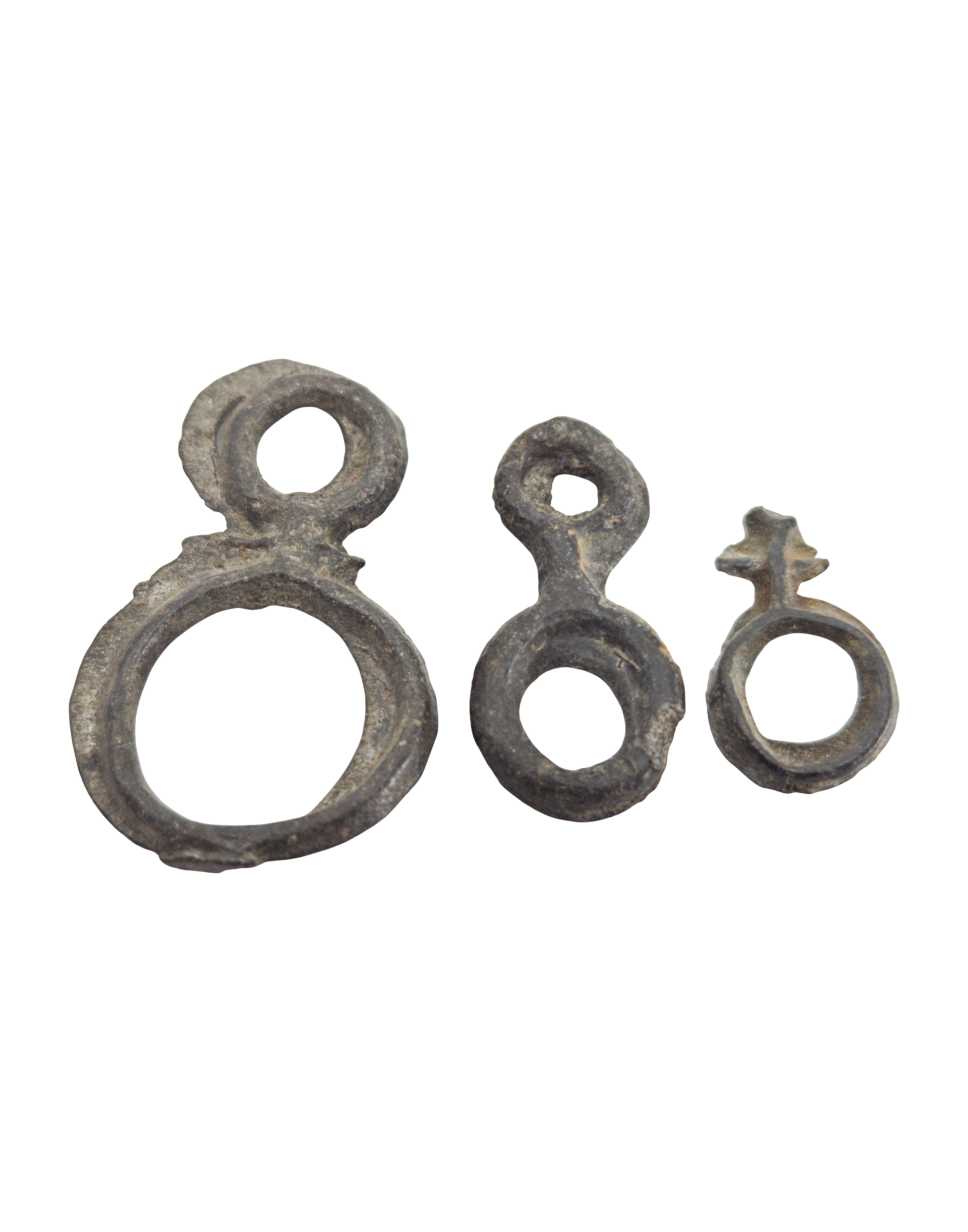
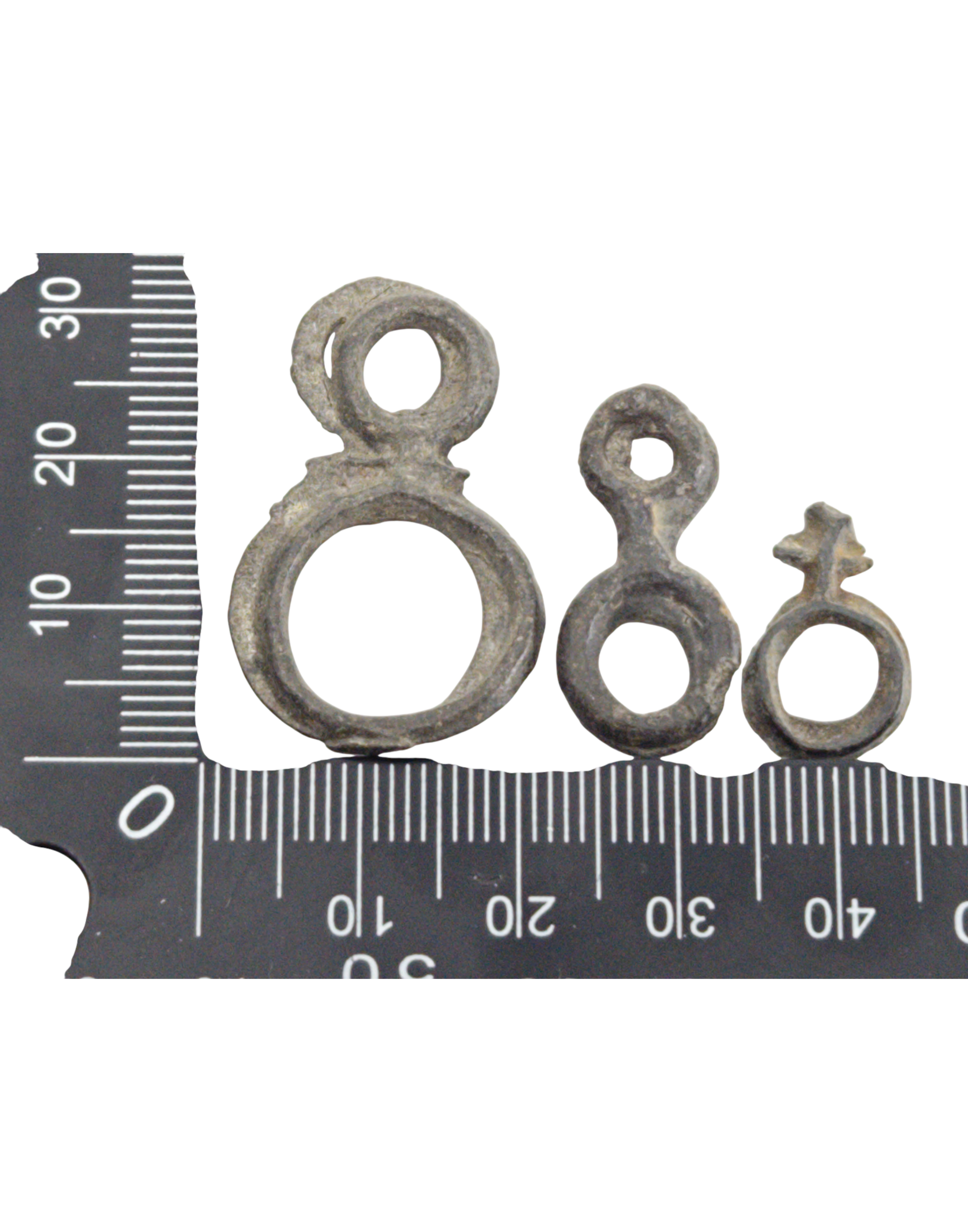
A fascinating trio of primitive Tin "Ring Money" from the Indonesian Archipelago (Majapahit to Sultanate periods, 14th - 17th Century).
Explore the origins of maritime trade with this set of three ancient tin/lead alloy rings. Found in the Java/Sumatra region, these "Double Ring" artifacts served a dual purpose in ancient society: as a recognized form of primitive currency and as protective amulets worn by travelers and merchants.
The "Figure Eight" Form: The interconnected circles allowed these pieces to be easily strung together on a cord for transport. This specific shape is a classic example of Southeast Asian "Ring Money."
Varied Typology: This set showcases three distinct sizes and styles, including one rare example featuring a stylized floral or cross-topped crest—likely signifying a different denomination or a specific regional mint.
Each piece carries a heavy, genuine archaeological patina, ranging from deep gray to earthy tones, characteristic of ancient metals recovered from the riverbeds or volcanic soil of Indonesia.
Specifications:
Region: Java/Sumatra, Indonesia.
Material: Ancient tin/lead alloy.
Largest Item Dimensions: 33 x 21 x 4 mm.
Largest Item Weight: 3.5 grams.
Quantity: Set of 3 unique pieces.
A perfect "study set" for collectors of primitive currency, early Southeast Asian trade history, or ancient metalwork.
Dimensions: diameter in mm: 32x20x4, weigth in gram: 6,5
Please take a good look at the photos, they are part of the description.
They provide a clear picture of the quality and condition of the product and
they fill in any gaps in the text or correct any errors and are decisive for the description of the product.