

Cube shaped trade weight, likely a 1/4 Tahil of a local Javanese standard or an early colonial standard (such as that of the VOC)., itemnumber: W5104
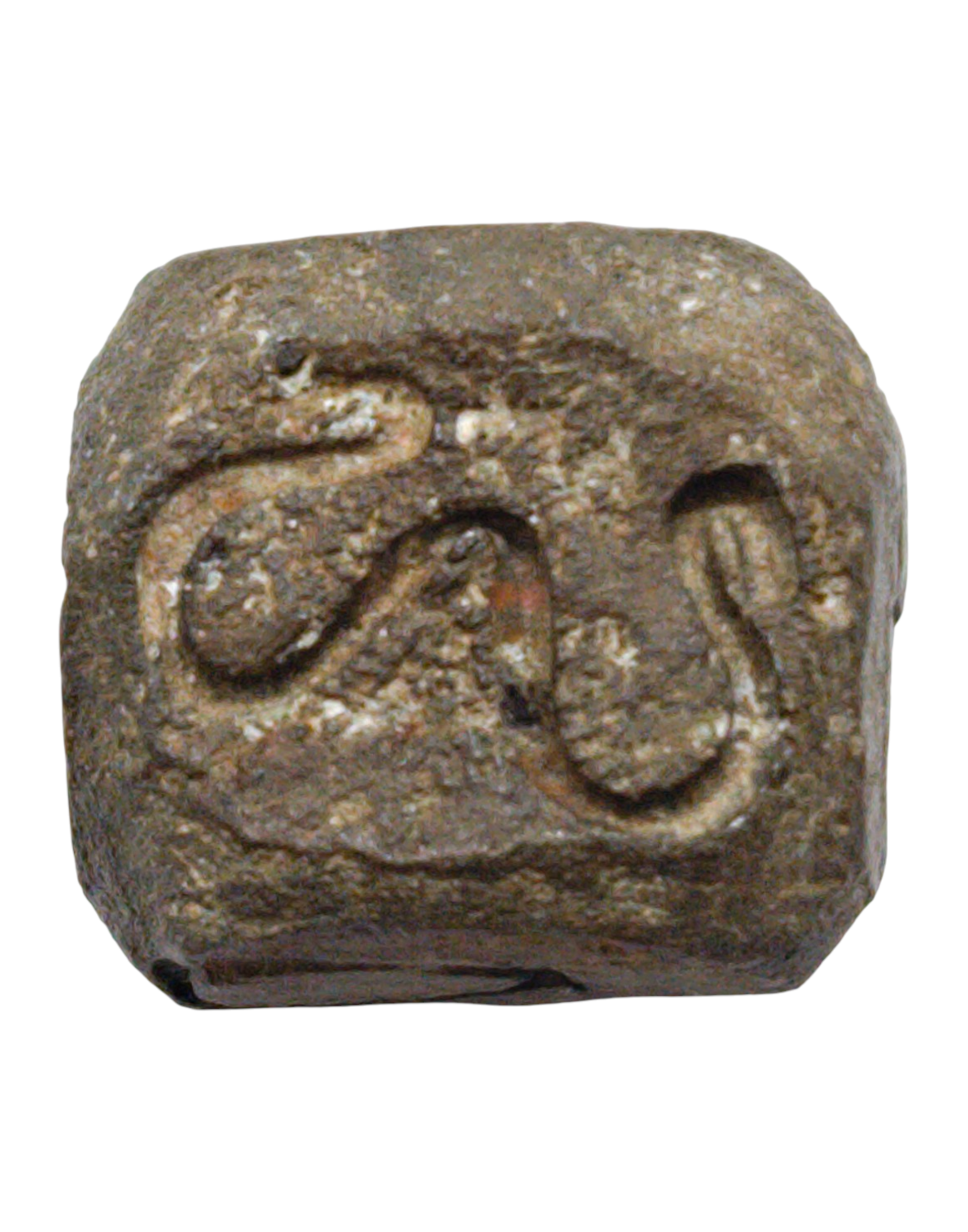
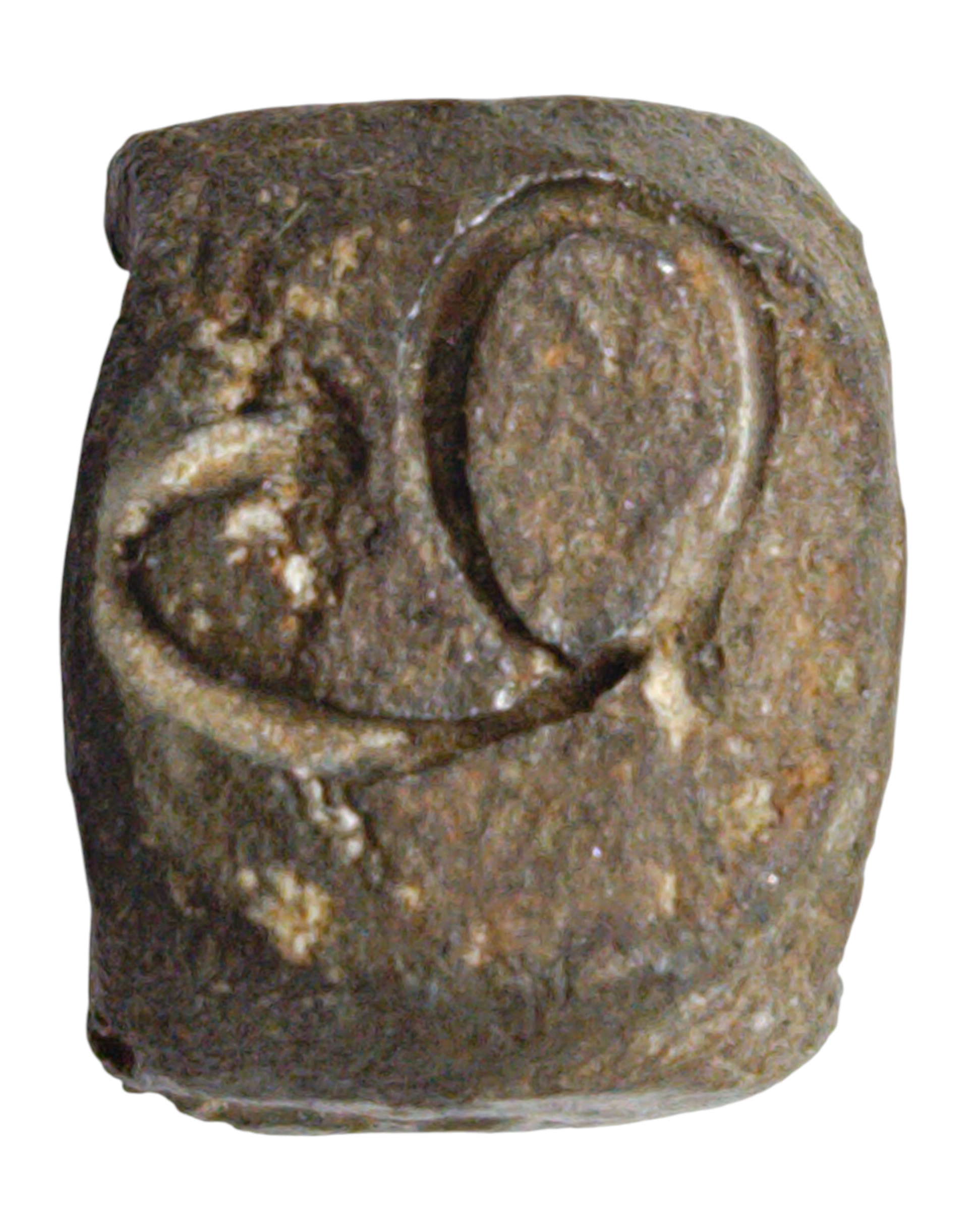
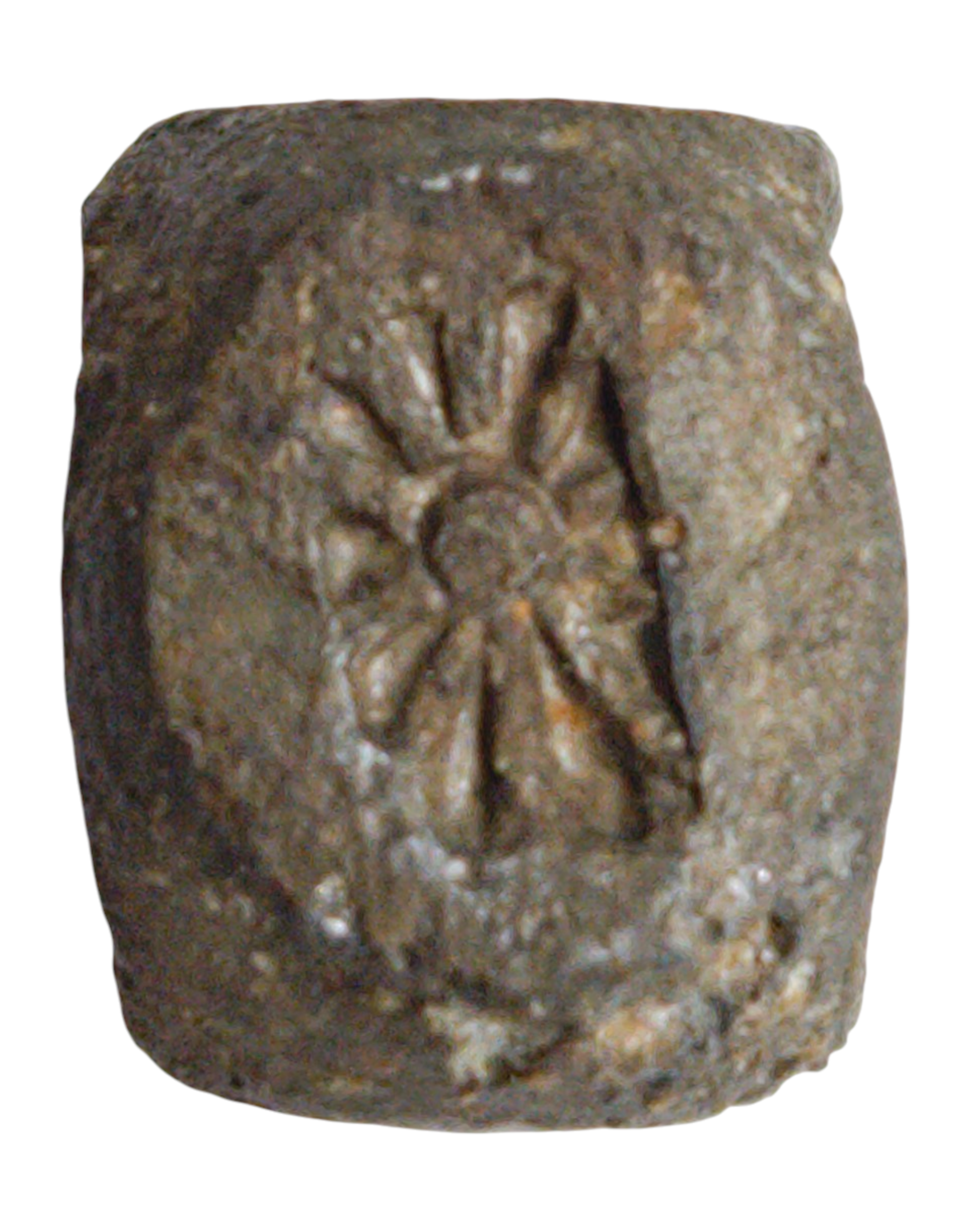
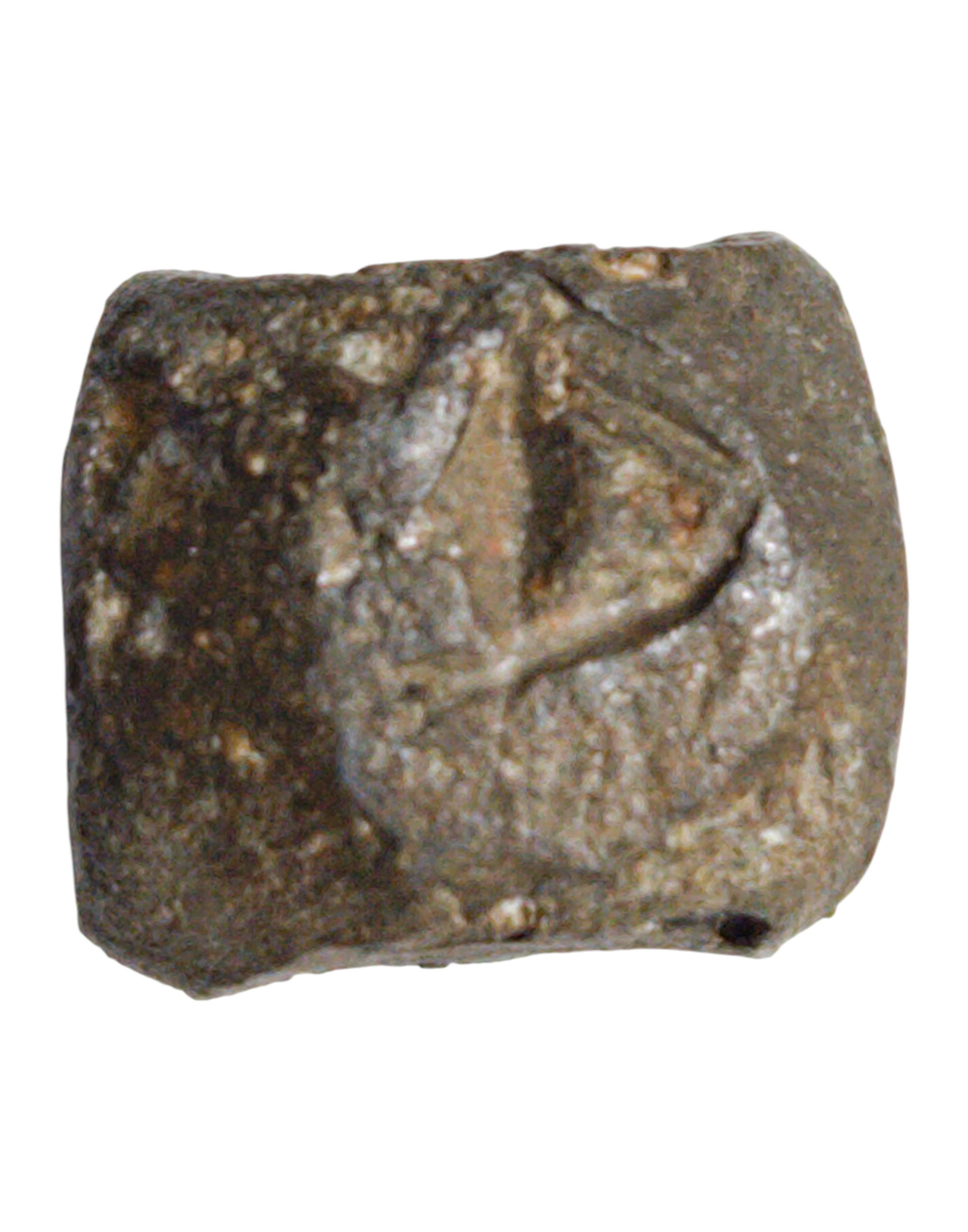
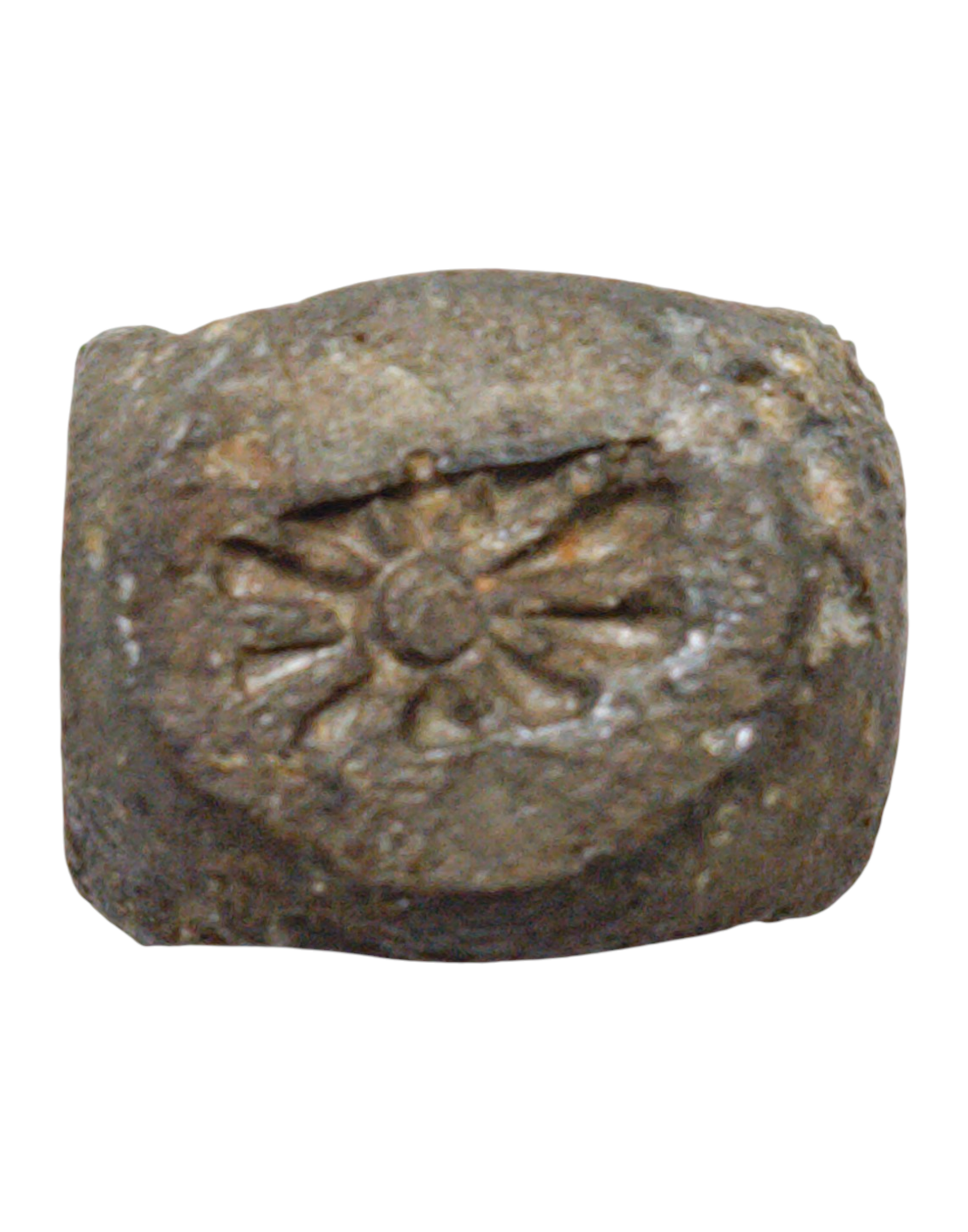
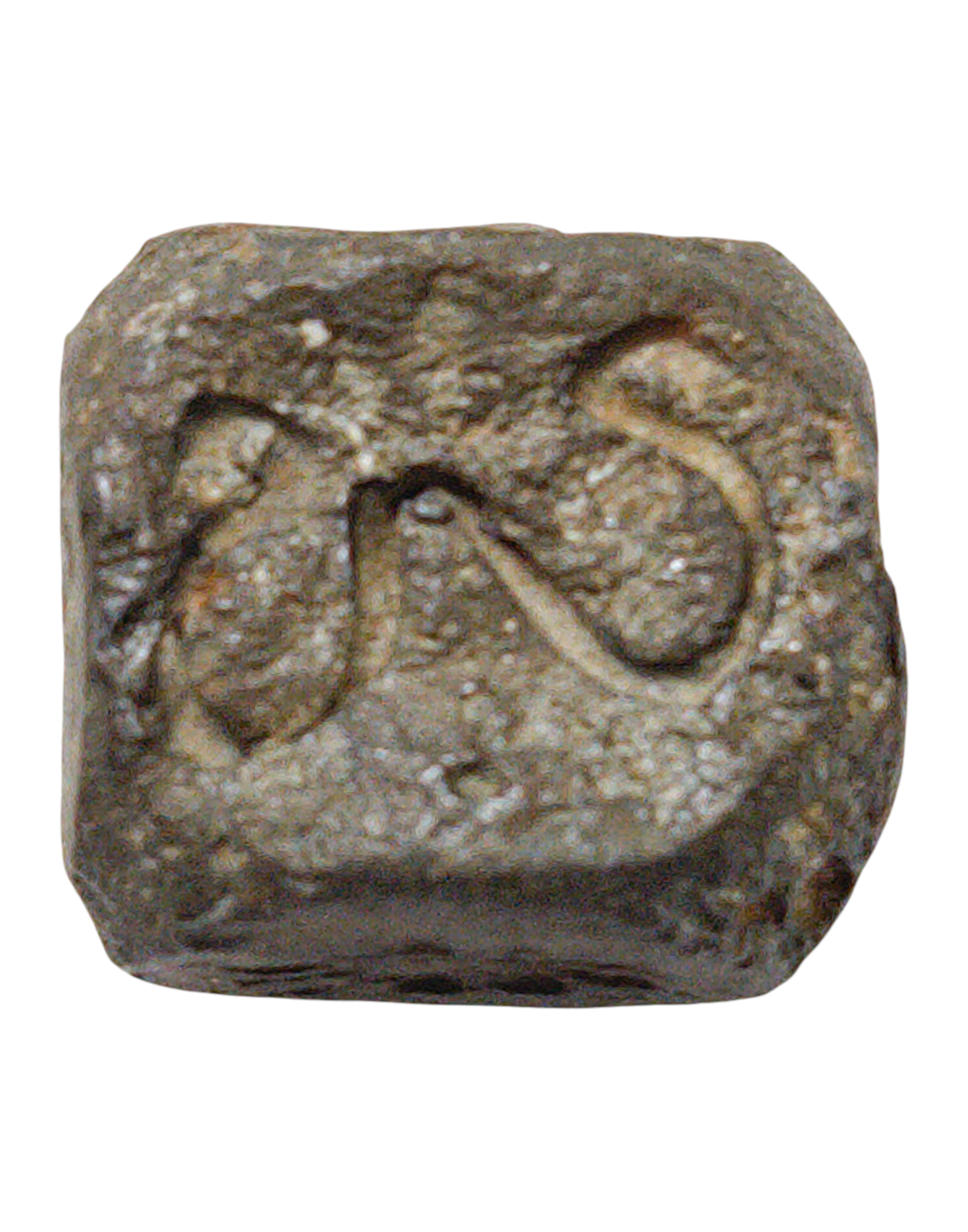
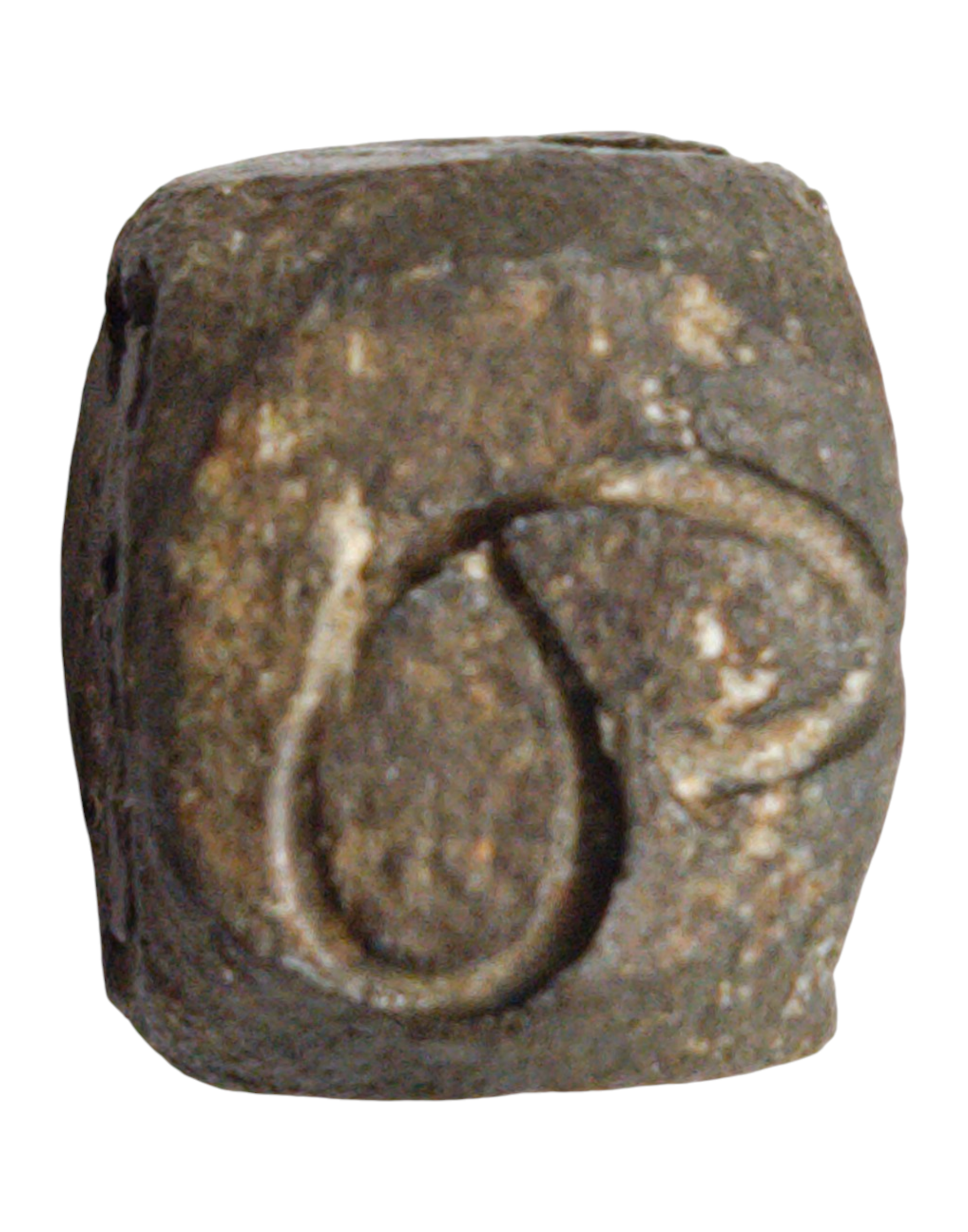
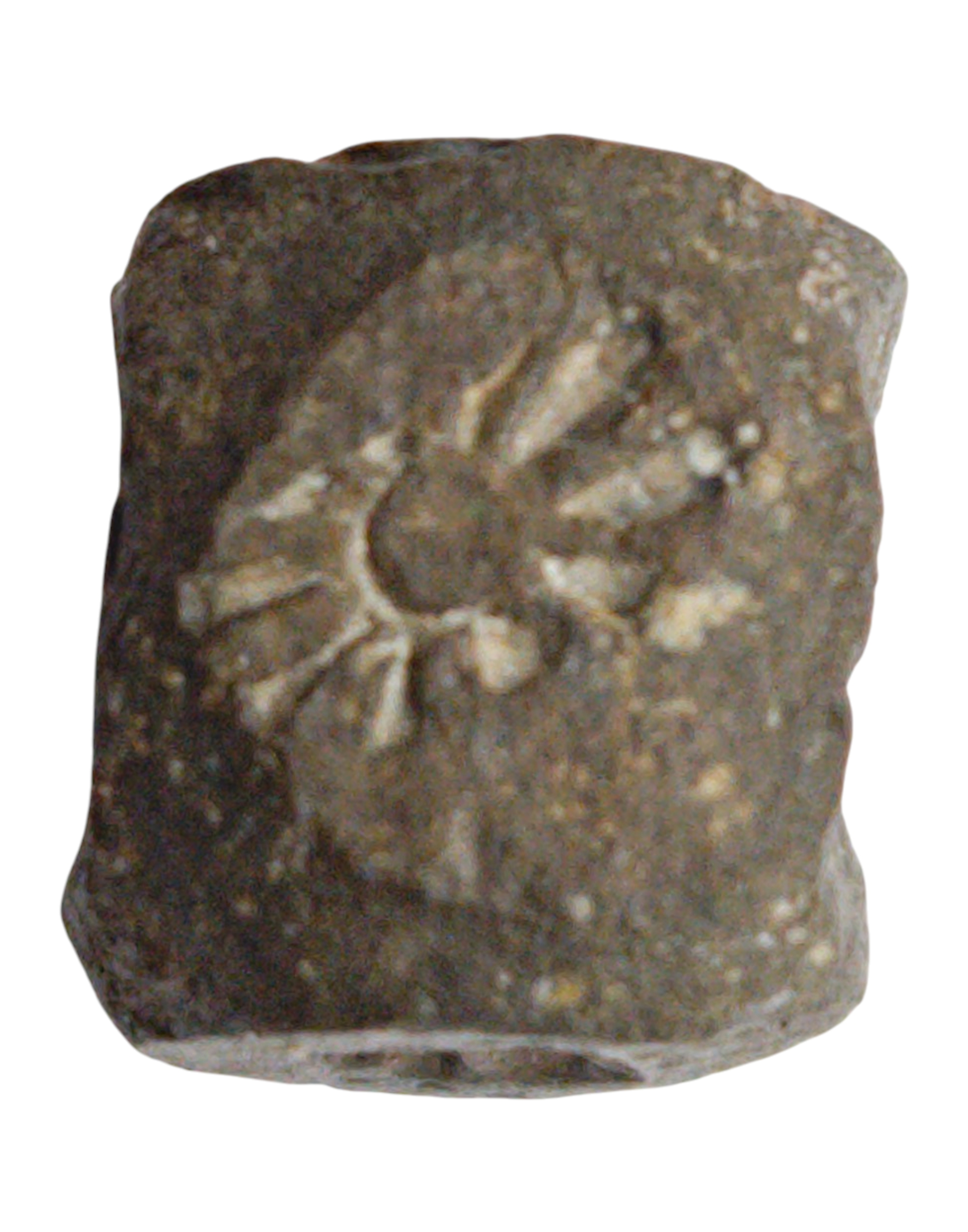
This is a trade weight, likely a 1/4 Tahil of a local Javanese standard or an early colonial standard (such as that of the VOC). Cube-shaped weights made of lead or a lead-tin alloy were very common in trade on Java during the 17th to 19th centuries for weighing precious goods such as spices, gold dust, medicines, or opium.
In the 19th century on Java, the opium trade was strictly regulated by the government (the so-called "Opium Regime"). Weights used for this purpose had to meet strict requirements and were regularly inspected and re-stamped. The fact that your small weight is marked on multiple sides indicates such a process of repeated inspection.
This cube has 4 markings!
- a triangle or a diamond-shaped symbol, which often served as a 'master mark' or a specific hallmark of a local weighing authority on Java.
- The number '9' (or a symbol resembling it). Given the weight of 9.9 grams, it is very likely that this figure indicates the mass or value. In a time when many different weight systems were mixed, such a clear stamp helped the merchant.
- The 8-leaved rosette, a classic Southeast Asian symbol for authority and dating (late 19th century).
- The "W" or "S": This is very likely the stamp of the inspector or the district in Java where the weight was checked. The swirling shape is typical of 19th-century hallmarks, which often contain a stylized letter of the region or the name of the inspector.
The fact that all six sides of this small cube (12x11x9 mm) are marked is very special and tells us that this was an extremely important and officially verified object.
Conclusion: An official Javanese Calibration Weight
This is not an everyday weight, but a multi-calibrated precision weight from the 19th century.
Why so many marks? During the colonial era and local trade on Java, weights were periodically checked by a 'master calibrator'. A new stamp was added with every approval. A weight marked on all sides, like this example, has therefore been in faithful use for years and has been officially approved time and again.
The weight of 9.9 grams: This confirms its function for weighing very valuable, light goods. Accuracy was crucial in this regard.
Dimensions: diameter in mm: 12x11x9, weigth in gram: 9,9
Please take a good look at the photos, they are part of the description.
They provide a clear picture of the quality and condition of the product and
they fill in any gaps in the text or correct any errors and are decisive for the description of the product.